Innovation at Lovehayne
One open-source control system, run locally on the farm, that watches and optimises the solar, batteries, heat pumps, vehicle charging and spring-fed water supply across a diversified East Devon farm and its holiday cottages.
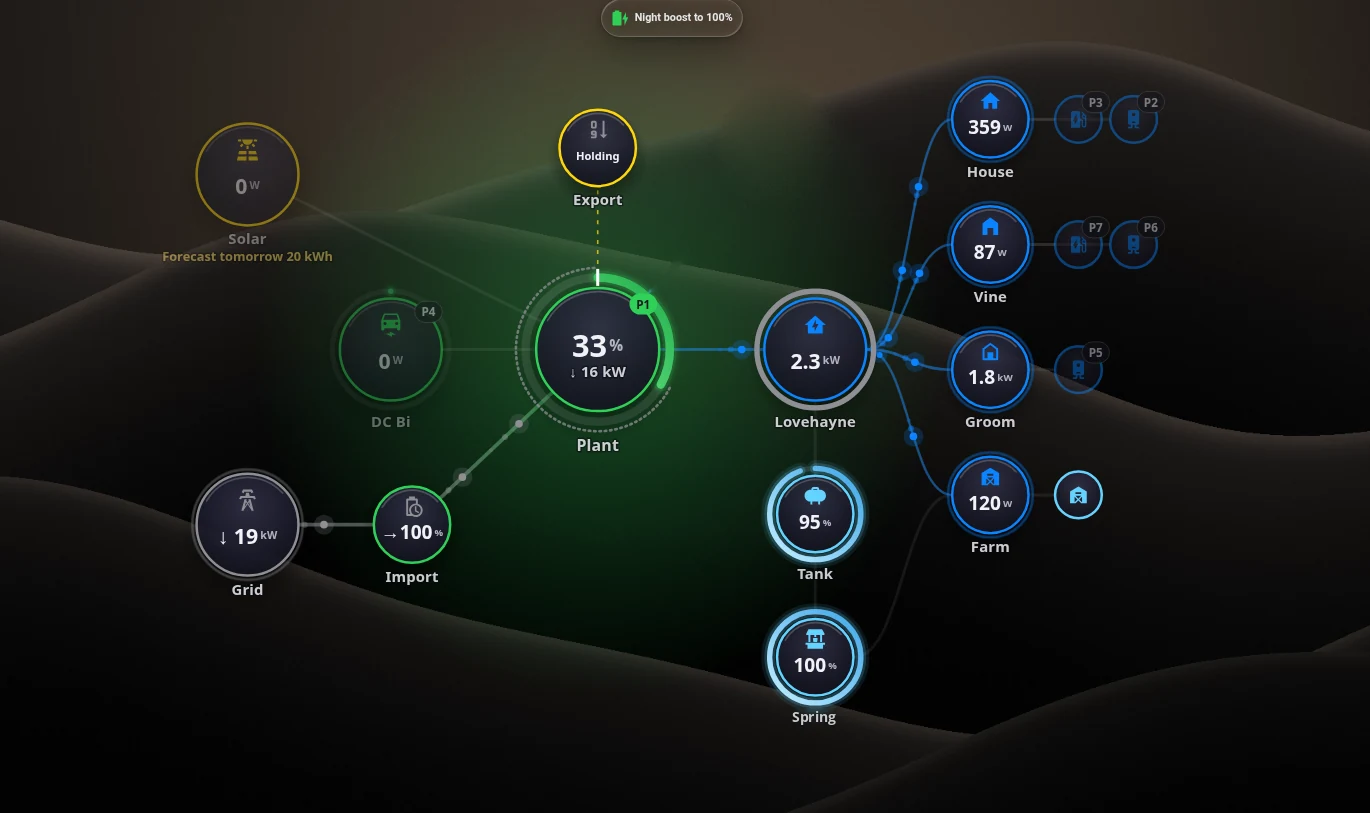
One system for a whole working farm
What makes it pioneering isn’t a single gadget. It’s bringing energy, heat, water and vehicles together on one working farm with holiday lets, using the farm’s own data.
Lovehayne runs on Home Assistant, an open-source platform, on a small computer here on the farm. Solar panels, the plant battery, the grid connection, heat pumps, hot water diverters, EV chargers, the spring-fed water supply and the spring tank all report into it, so we see the whole site in one place instead of a drawer full of separate apps.
Because it runs locally and isn’t tied to any one supplier, it keeps working when the internet doesn’t. It plans battery charging around the tariff and the solar forecast, sends spare sunshine into hot water and vehicles, and phones us when something looks wrong, often before anyone on the farm would notice.
The numbers so far
Measured, not claimed. These come straight from the farm’s own meters and control system.
Over 140 MWh
of solar generated since the system was commissioned.
Roughly 4 to 1
We send around four times more power to the grid than we take from it.
88.7 kWh
of on-site battery storage, charged by the sun and cheap overnight power.
3,000+
devices and sensors the system can see, from meters to chargers and pumps.
100+
automations quietly running the farm day and night.
24 hours+
that our vehicle-to-home pickup can run the whole house on its own.
Water that phones home
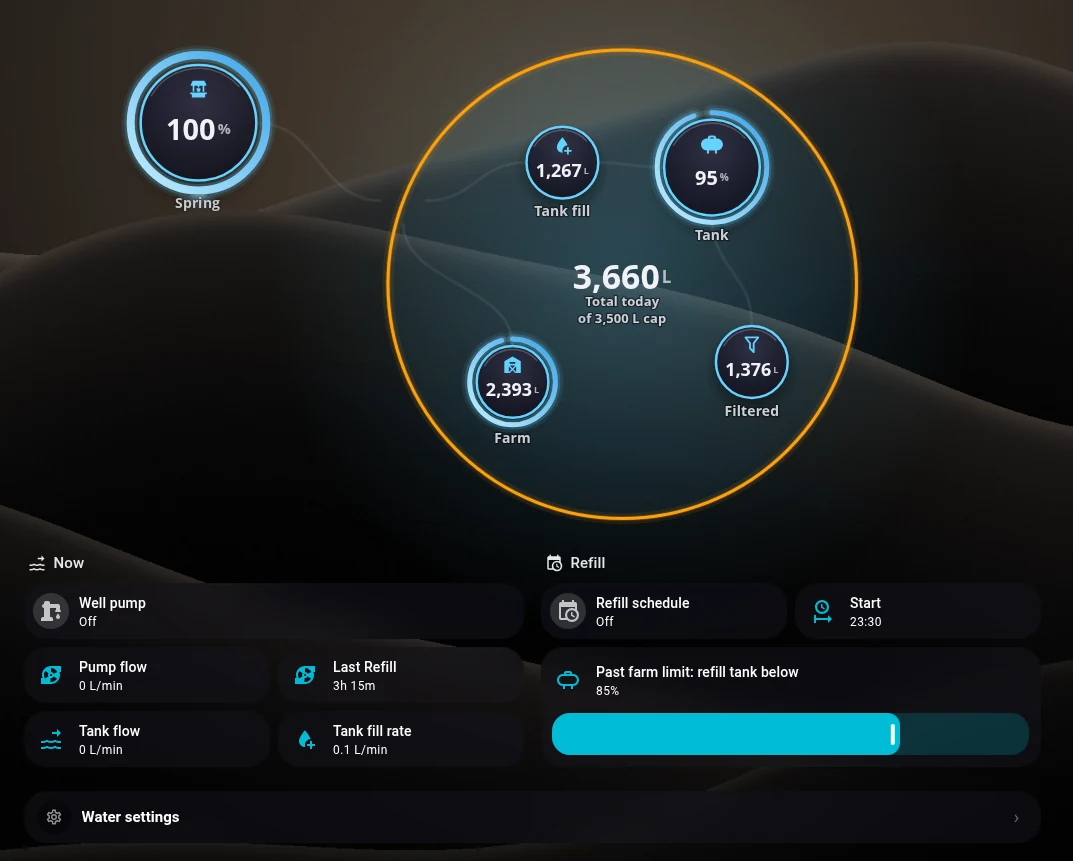
Our water comes from a spring-fed water supply, collected in a spring tank, and every litre in and out is metered. The water view shows the supply, the spring tank, the farm and the cottages at a glance.
Cheap night power, planned ahead
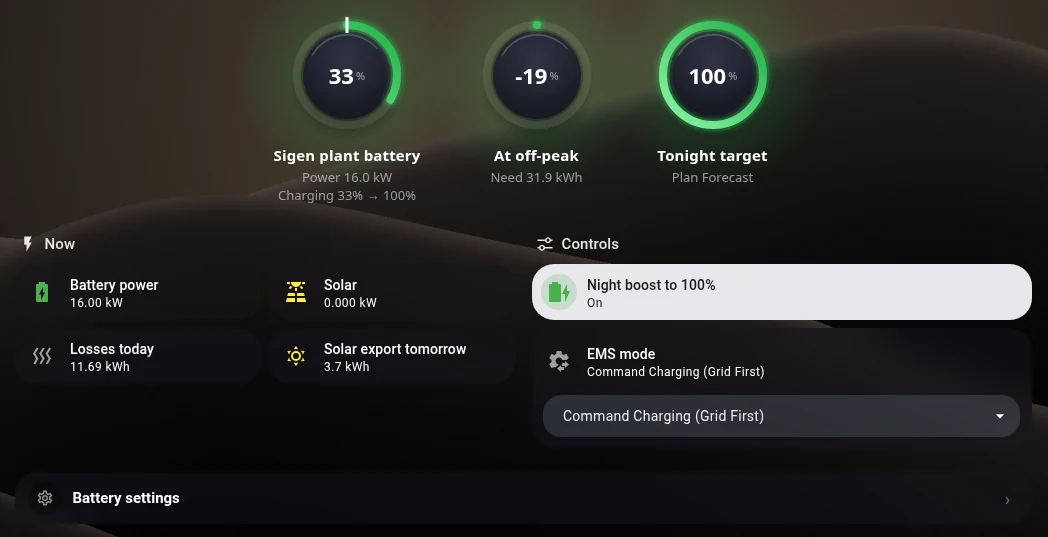
Each evening the system sets a charging target for the farm battery, based on tomorrow’s solar forecast and the overnight tariff, so we use our own sunshine by day and cheaper, greener power at night.
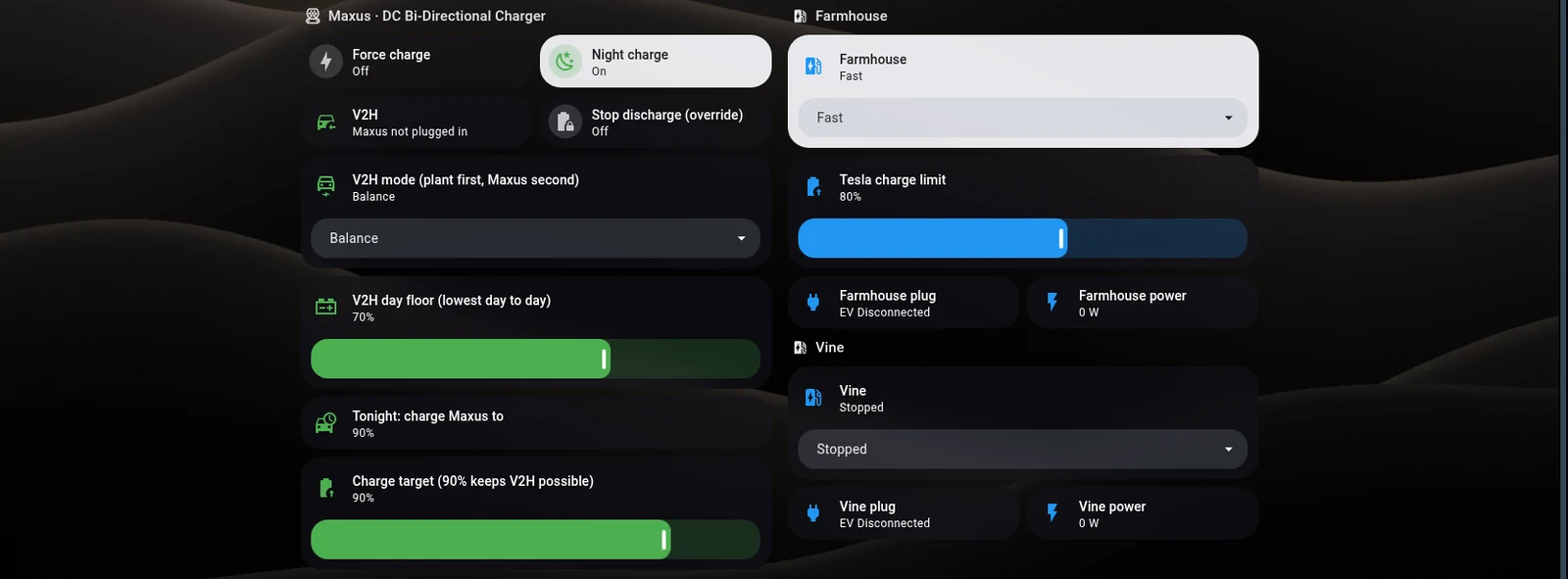
The farm pickup is a second battery
Our farm pickup sits on a bi-directional charger, so it can power the farm as well as charge from it. The system uses the main battery first and the vehicle second, and the pickup can run the whole farm for 24 hours or more.
The same view manages the farmhouse charger and the guest EV charger at Vine Cottage.
Warm cottages, from the sun and heat pumps
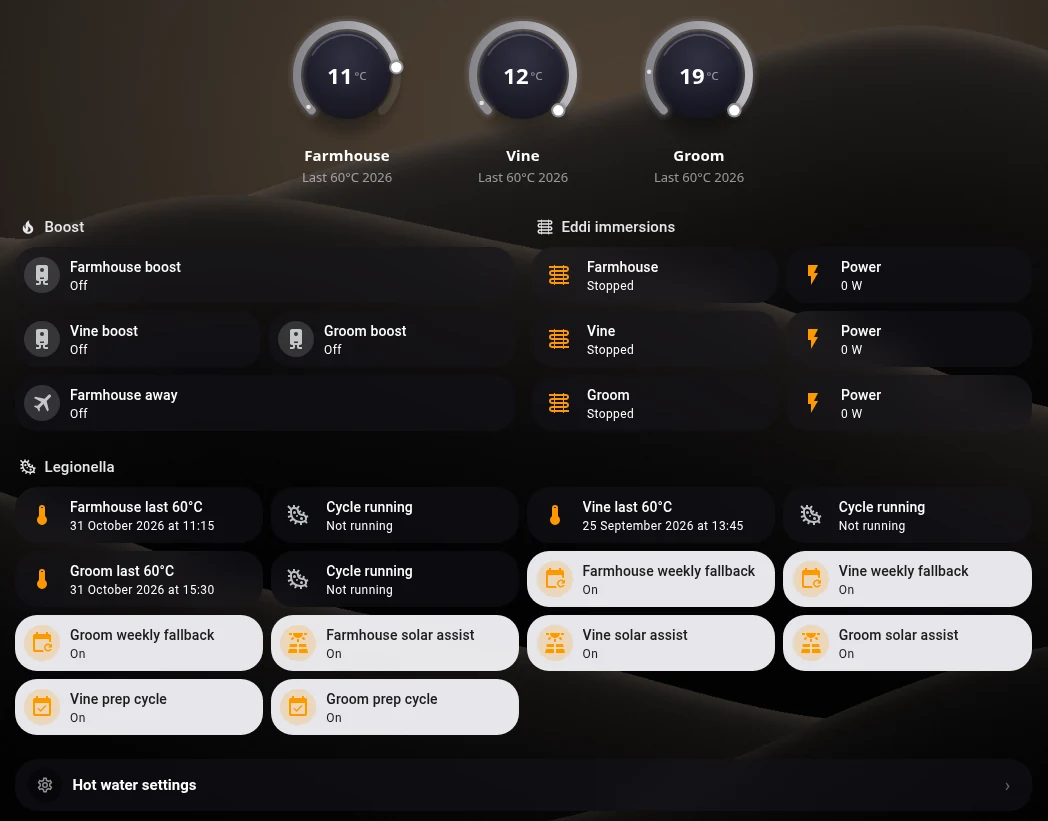
Vine and Groom cottages are heated by heat pumps. When there’s spare solar, the system sends it into the hot water cylinders first, so the sun heats the water whenever it can.
Planning around the sun and the tariff
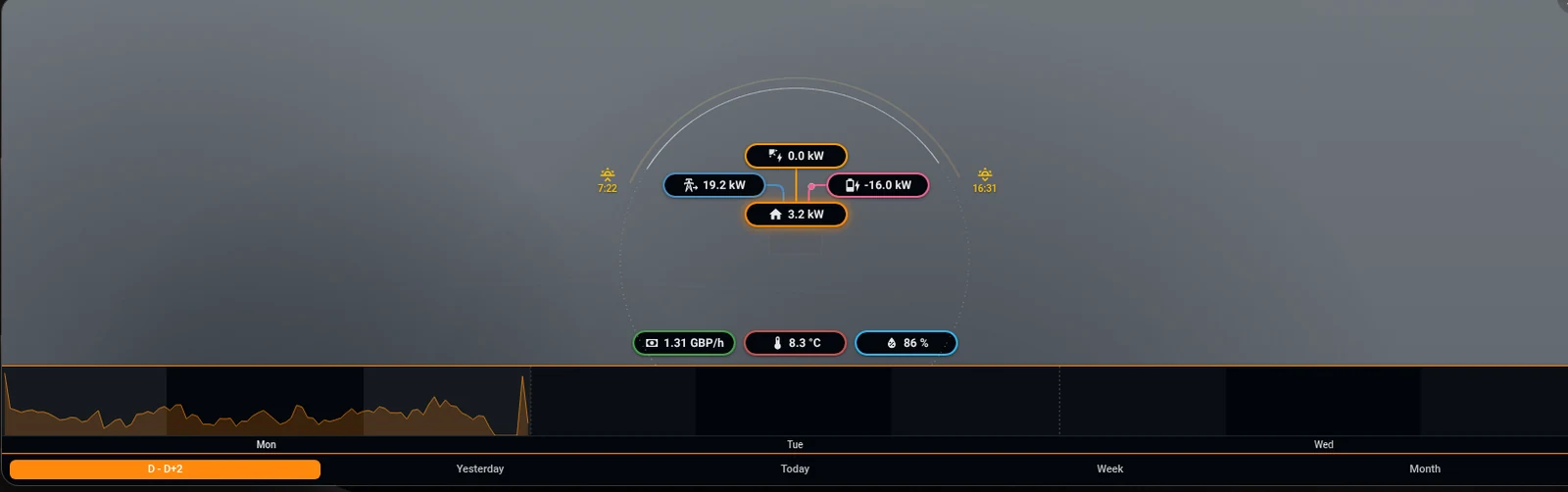
The solar day view follows the sun from sunrise to sunset alongside live power, the current electricity price and the weather. Behind it, a planner uses the solar forecast and tariff rates to decide when to charge, when to hold and when to export.
It all runs on open-source software, so the farm’s data stays our own and we can keep improving it ourselves.
How the system protects
The system runs locally on the farm and looks after it around the clock, quietly stepping in before small problems become big ones.
Leaks spotted early
It watches the flow from our spring tank day and night, spots unusual water loss or a leak early, and alerts us straight away.
Runaway heaters stopped
Heaters take their lead from room sensors the system trusts, so if one starts to run away it’s caught and switched off.
Back-up power on wheels
Our vehicle-to-home pickup acts as a second battery and can run the whole house for 24 hours or more.
Warm cottages
It keeps watch on the warmth in the cottages and alerts us if a temperature starts to drop too low.
Hot-water hygiene, on autopilot
Hot water cylinders get regular high-temperature hygiene cycles, run automatically and recorded each time.
Local control, offline-first
Everything runs on a small computer here on the farm, not in the cloud, so control stays local and the farm keeps running even when the internet doesn’t.
Part of a bigger plan
The control system is one piece of how we’re making Lovehayne a more sustainable farm.